
 EN
EN
Choosing between a compressor nebulizer and an ultrasonic nebulizer represents a critical decision that directly impacts treatment effectiveness and patient compliance. Healthcare providers and patients alike must navigate the distinct advantages and limitations of each technology to determine which nebulizer type aligns best with their specific therapeutic requirements and usage patterns.
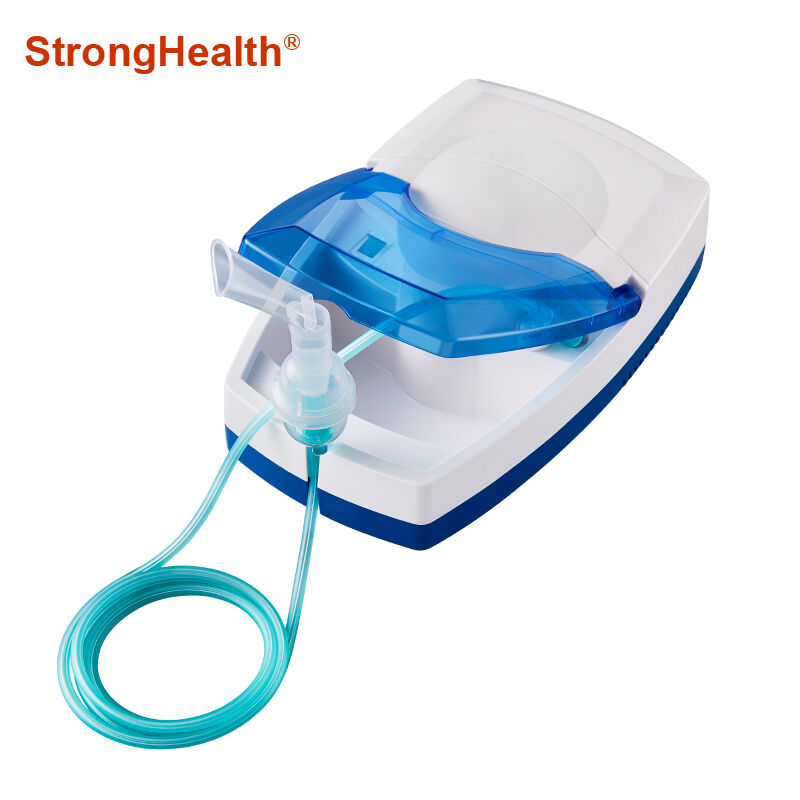
The selection process involves evaluating multiple factors including medication compatibility, particle size consistency, treatment duration, operational noise levels, and long-term maintenance requirements. While both nebulizer types serve the fundamental purpose of converting liquid medications into inhalable aerosols, their underlying mechanisms create distinct performance profiles that make each more suitable for specific clinical scenarios and patient populations.
Fundamental Technology Differences
Compressor Nebulizer Operating Mechanism
A compressor nebulizer utilizes compressed air to create the nebulization process through a high-velocity air stream. The compressor unit generates pressurized air that passes through a narrow orifice, creating a venturi effect that draws liquid medication upward from the reservoir. This air stream then impacts against a baffle system, breaking the medication into fine droplets suitable for inhalation.
The Compressor Nebulizer design ensures consistent particle generation regardless of medication viscosity or ambient temperature conditions. The mechanical compression process maintains stable output characteristics throughout the entire treatment duration, making this technology particularly reliable for consistent therapeutic delivery.
This pneumatic approach allows for precise control over particle size distribution through careful engineering of the air pressure settings and baffle configuration. The robust nature of compressor nebulizer systems makes them suitable for frequent use in clinical settings where reliability and predictable performance are paramount considerations.
Ultrasonic Nebulizer Technology
Ultrasonic nebulizers employ high-frequency sound waves, typically operating at frequencies between 1-3 MHz, to agitate liquid medication and create aerosol particles. A piezoelectric transducer converts electrical energy into mechanical vibrations that transmit through the medication reservoir, causing cavitation and subsequent droplet formation.
The ultrasonic process generates heat as a byproduct of the high-frequency vibrations, which can affect certain heat-sensitive medications. This thermal effect requires careful consideration when selecting medications for ultrasonic delivery, as protein-based drugs and some suspensions may experience degradation under elevated temperatures.
Particle size uniformity in ultrasonic systems depends heavily on medication properties such as surface tension, viscosity, and density. While ultrasonic nebulizers often produce smaller average particle sizes compared to compressor systems, this advantage may not translate to improved clinical outcomes for all medication types.
Medication Compatibility Considerations
Compressor Nebulizer Drug Versatility
Compressor nebulizer systems demonstrate exceptional compatibility with virtually all nebulizable medications, including solutions, suspensions, and viscous formulations. The mechanical nebulization process does not generate significant heat, preserving medication integrity for heat-sensitive compounds such as proteins, enzymes, and certain antibiotics.
Suspension medications, including budesonide and other corticosteroid preparations, perform optimally with compressor nebulizer technology. The consistent air pressure and mechanical agitation ensure uniform distribution of suspended particles throughout the treatment duration, preventing medication settling that could compromise dosing accuracy.
The compressor nebulizer approach accommodates high-viscosity medications that might challenge other nebulization methods. This versatility makes compressor systems the preferred choice in clinical environments where multiple medication types require administration through a single nebulizer platform.
Ultrasonic System Medication Limitations
Ultrasonic nebulizers face significant restrictions when processing certain medication categories due to their heat-generating properties and sensitivity to fluid characteristics. Protein-based medications, including dornase alfa and certain antibiotics, may experience denaturation when exposed to the thermal effects of ultrasonic vibrations.
Suspension formulations often perform poorly in ultrasonic systems because the high-frequency vibrations can cause particle separation and inconsistent drug delivery. The lack of mechanical agitation means that suspended particles may settle during treatment, leading to variable medication concentrations throughout the nebulization process.
Oil-based medications and formulations with high surface tension present additional challenges for ultrasonic nebulizers. The acoustic energy transfer becomes less efficient with these fluid properties, resulting in reduced nebulization rates and potentially incomplete medication delivery.
Performance and Efficiency Analysis
Treatment Duration and Output Rates
Compressor nebulizer systems typically require longer treatment times compared to ultrasonic alternatives, with average session durations ranging from 10-20 minutes depending on medication volume and viscosity. The mechanical nebulization process operates at consistent rates but may seem slower when patients prioritize treatment speed over other considerations.
However, compressor nebulizer technology offers superior medication utilization efficiency, with residual volumes often lower than ultrasonic systems. This efficiency translates to better medication economy and more predictable dosing, particularly important for expensive therapeutic agents where waste minimization directly impacts treatment costs.
The consistent output characteristics of compressor nebulizer systems ensure reliable treatment durations that healthcare providers can incorporate into structured treatment protocols. This predictability proves valuable in clinical settings where scheduling and workflow management require accurate time estimates.
Particle Size Distribution Patterns
Ultrasonic nebulizers generally produce finer particle sizes with tighter distribution curves, potentially enhancing deep lung penetration for specific therapeutic applications. The mass median aerodynamic diameter (MMAD) for ultrasonic systems typically ranges from 1-3 microns, optimizing deposition in peripheral airways.
Compressor nebulizer particle size distributions demonstrate broader ranges but maintain excellent clinical effectiveness for most respiratory medications. The slightly larger average particle sizes produced by compressor systems may actually benefit certain therapeutic applications where central airway deposition is preferred over peripheral distribution.
The stability of particle size characteristics throughout treatment duration favors compressor nebulizer technology, as mechanical systems maintain consistent performance regardless of medication temperature changes or reservoir volume levels during extended treatments.
Practical Usage Considerations
Operational Characteristics and User Experience
Compressor nebulizer systems generate moderate noise levels during operation, typically ranging from 55-65 decibels, which may concern noise-sensitive patients or quiet environments. However, modern compressor nebulizer designs incorporate sound-dampening technologies that significantly reduce operational noise compared to earlier generations.
The robust construction of compressor nebulizer units provides excellent durability and longevity, often operating reliably for several years with proper maintenance. This durability makes compressor systems cost-effective choices for frequent users and institutional applications where equipment replacement costs significantly impact operational budgets.
Portability considerations favor ultrasonic nebulizers due to their typically smaller size and lighter weight profiles. However, compressor nebulizer portability has improved substantially with compact designs that maintain full functionality while reducing overall system weight and dimensions.
Maintenance and Cleaning Requirements
Compressor nebulizer maintenance involves straightforward procedures focused primarily on nebulizer cup cleaning and occasional air filter replacement. The separation of the compressor unit from the medication contact surfaces simplifies hygiene protocols and reduces the risk of cross-contamination between treatments.
The mechanical nature of compressor nebulizer systems means fewer electronic components come into contact with medications, reducing maintenance complexity and potential failure points. This design philosophy contributes to longer service life and lower maintenance costs over the equipment lifecycle.
Ultrasonic nebulizers require more careful maintenance of the transducer surface and electronic components, with mineral buildup and residue potentially affecting performance more significantly than with compressor systems. The integrated design of ultrasonic units can complicate thorough cleaning procedures.
Clinical Applications and Suitability
Healthcare Setting Requirements
Hospital and clinical environments typically prefer compressor nebulizer systems due to their universal medication compatibility and predictable performance characteristics. The ability to use a single nebulizer type for all patients and medications simplifies inventory management and reduces staff training requirements.
Home care applications may benefit from either technology depending on specific patient needs and medication requirements. Compressor nebulizer systems excel when medication variety or suspension formulations are involved, while ultrasonic units may appeal to patients prioritizing quiet operation and compact storage.
Pediatric applications often favor compressor nebulizer technology due to the shorter treatment windows required for effective drug delivery and the robust nature of the equipment that withstands frequent handling by young patients and caregivers.
Patient Population Considerations
Elderly patients and those with limited dexterity often find compressor nebulizer systems easier to operate and maintain due to their simpler interface designs and fewer electronic controls. The visual and audible feedback provided by compressor systems helps patients confirm proper operation during treatments.
Patients requiring multiple daily treatments may prefer ultrasonic systems for their quieter operation, though this advantage must be weighed against medication compatibility requirements. The faster treatment times offered by ultrasonic nebulizers can improve compliance for patients with busy schedules.
Chronic disease management scenarios often benefit from compressor nebulizer reliability and consistency, particularly when treatment protocols involve complex medication regimens or require precise dosing control over extended periods.
FAQ
Can I use any medication with both compressor and ultrasonic nebulizers?
No, medication compatibility varies significantly between nebulizer types. Compressor nebulizer systems can handle virtually all nebulizable medications, including solutions, suspensions, and heat-sensitive compounds. Ultrasonic nebulizers have limitations with suspension medications, protein-based drugs, and formulations that may degrade under heat exposure. Always consult your healthcare provider or pharmacist about medication compatibility before switching nebulizer types.
Which nebulizer type provides faster treatment times?
Ultrasonic nebulizers typically offer faster treatment times, often completing sessions in 5-10 minutes compared to 10-20 minutes for compressor nebulizer systems. However, treatment speed should be balanced against medication compatibility and clinical effectiveness. Some medications may require the longer, gentler delivery provided by compressor systems to achieve optimal therapeutic outcomes.
How do maintenance requirements differ between these nebulizer types?
Compressor nebulizer maintenance focuses on cleaning the nebulizer cup and replacing air filters periodically, with the compressor unit requiring minimal attention. Ultrasonic systems need careful cleaning of the transducer surface and electronic components, with mineral deposits potentially affecting performance. Overall, compressor nebulizer systems typically require less complex maintenance procedures and have fewer components that can be damaged by improper cleaning.
Are there significant cost differences between compressor and ultrasonic nebulizers?
Initial purchase costs vary depending on features and quality, with both types available across similar price ranges. Long-term costs may favor compressor nebulizer systems due to their durability, lower maintenance requirements, and better medication utilization efficiency. Ultrasonic nebulizers may incur higher replacement costs due to their electronic components and more complex maintenance needs, though their faster treatment times could provide indirect cost benefits through improved patient compliance.