
 EN
EN
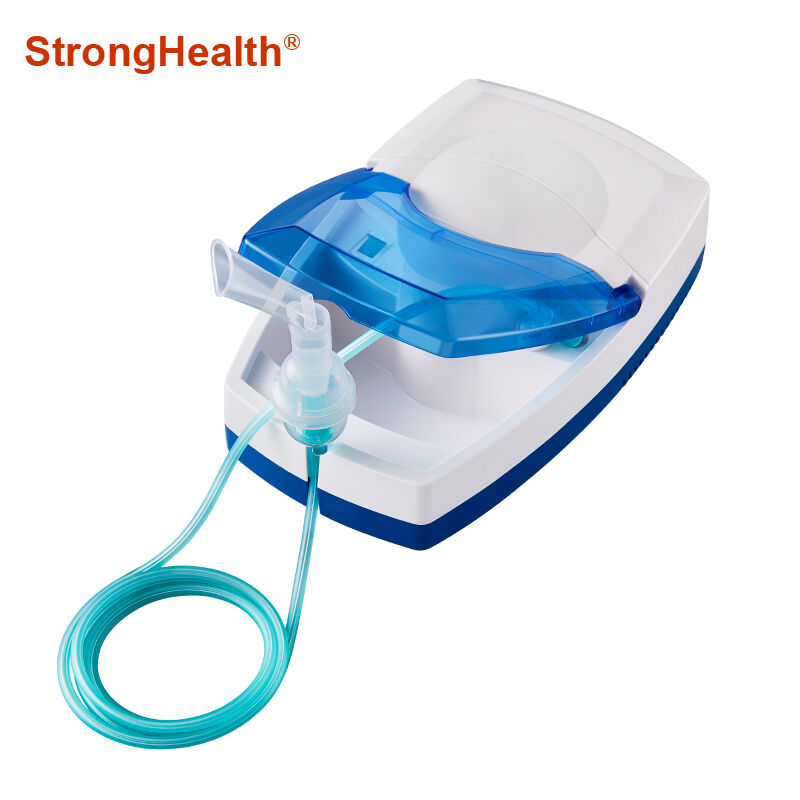
When it comes to respiratory therapy, choosing the right nebulizer can make a significant difference in treatment outcomes, convenience, and cost. Whether you are a patient managing a chronic respiratory condition at home or a healthcare provider equipping a clinical environment, understanding the distinction between a professional nebulizer and a Home Nebulizer is essential. These two categories may appear similar on the surface, but they are designed with fundamentally different goals, specifications, and use cases in mind.
A home nebulizer is engineered for ease of use, portability, and suitability for individual patient routines. Professional nebulizers, on the other hand, are built to handle higher workloads, deliver precise drug dosing across a variety of medications, and withstand the rigors of a busy clinical setting. Understanding these differences helps patients make informed purchases, helps caregivers choose appropriate devices, and ensures that respiratory therapy is as effective as possible. This article explores the key distinctions in design, performance, intended users, maintenance requirements, and clinical applications.
Design and Engineering Differences
Build Quality and Durability
Professional nebulizers are typically constructed from heavier-duty materials designed to survive repeated daily use in hospitals, clinics, and outpatient respiratory therapy centers. They undergo rigorous testing standards to ensure longevity under continuous operation, often rated for thousands of hours of cumulative use. In contrast, a home nebulizer is designed for intermittent personal use, usually aligned with a patient's prescribed therapy sessions of 10 to 20 minutes per day.
This does not mean a home nebulizer is fragile or unreliable. Modern home nebulizers are built with solid plastics, durable compressors, and long-lasting mesh or jet mechanisms. However, their components are optimized for the specific pattern of home use rather than the continuous cycling demands of a clinical facility. The engineering priorities differ according to the expected usage intensity.
The size and form factor also diverge significantly. Professional nebulizers tend to be larger, designed to sit on treatment carts or mounted in fixed positions. A home nebulizer is often compact, lightweight, and in many cases designed to be portable enough to carry in a travel bag or handbag, accommodating the lifestyle needs of the user.
Nebulization Technology
Both professional and home nebulizer devices rely on similar underlying technologies — jet (pneumatic), ultrasonic, or mesh nebulization — but the specific implementation varies. Professional devices frequently incorporate advanced mesh nebulization with programmable flow rates, allowing clinicians to adjust particle size and drug delivery speed according to the patient's lung condition and the drug's pharmacological requirements.
A home nebulizer typically offers simpler controls, often a single on/off switch or a minimal setting interface, because the patient is following a fixed prescription protocol rather than dynamically adjusting therapy parameters. This simplicity is a strength, not a limitation, because it reduces the risk of user error in an unsupervised home setting.
Mesh technology has become increasingly common in premium home nebulizer models, offering quieter operation, finer particle generation, and reduced medication waste compared to older jet-based designs. This advancement has significantly narrowed the gap between what home and professional devices can achieve in terms of aerosol quality.
Intended Users and Clinical Context
Who Uses a Professional Nebulizer
Professional nebulizers are deployed in settings where trained medical personnel administer treatment. These include hospital emergency departments, pulmonology clinics, intensive care units, and physiotherapy wards. In these environments, the nebulizer may be used across multiple patients throughout a single shift, requiring thorough sterilization protocols and robust build standards between each use.
Clinicians using professional nebulizers often need to deliver a broader range of medications, including bronchodilators, corticosteroids, antibiotics, and mucolytics. The devices are calibrated to handle varying viscosities and chemical compositions, ensuring consistent and safe aerosolization. The level of technical control available in professional devices reflects this diversity of therapeutic applications.
Training and institutional protocols also play a major role. Healthcare professionals follow documented procedures for device setup, calibration, drug loading, and patient positioning. This supervised environment allows for greater device complexity without risk of misuse.
Who Uses a Home Nebulizer
A home nebulizer is designed for individual patients managing conditions such as asthma, chronic obstructive pulmonary disease (COPD), cystic fibrosis, or recurrent bronchitis. These patients use their device independently, following instructions provided by their prescribing physician or respiratory therapist. The simplicity and safety features built into a home nebulizer reflect the reality that users may include elderly individuals, young children, or people with limited technical knowledge.
Most home nebulizer prescriptions involve a small set of standardized medications — commonly salbutamol, ipratropium, or budesonide — used consistently in the same doses each day. This predictable treatment pattern allows the home nebulizer to be optimized for reliability and ease rather than maximum configurability.
Affordability is also a critical consideration for home use. A home nebulizer must deliver genuine clinical value at a price point accessible to individual consumers, without the institutional procurement budgets available to healthcare facilities. This has driven significant innovation in home nebulizer design, particularly with the rise of affordable mesh technology devices that deliver excellent aerosol performance at reasonable consumer prices.
Performance Specifications and Medication Delivery
Particle Size and Drug Deposition
One of the most clinically important metrics for any nebulizer is the mass median aerodynamic diameter (MMAD) of the aerosol particles it produces. Particles in the 1 to 5 micron range are most effective for reaching the lower airways, including the bronchi and alveoli, where bronchodilators and other drugs must act. Professional nebulizers are often laboratory-tested and formally rated for specific MMAD values to support clinical validation and regulatory compliance.
A high-quality home nebulizer is also capable of producing particles within the therapeutically effective range. Leading home nebulizer products include technical datasheets specifying particle size distributions, residual volume, and drug output rate. Patients and prescribers can use this information to select a home nebulizer that meets the requirements of their specific medication and lung condition.
However, professional nebulizers in specialized clinical settings may offer tighter control over particle size consistency across a wider range of liquid viscosities, which is particularly important for complex inhaled antibiotic therapies used in conditions like bronchiectasis or cystic fibrosis. For standard home therapy with common bronchodilators, a well-designed home nebulizer performs comparably.
Duty Cycle and Treatment Speed
The duty cycle refers to how long a nebulizer can operate continuously before it needs to rest to prevent overheating. Professional nebulizers are engineered for extended or even continuous duty cycles to accommodate back-to-back patient treatments in clinical environments. A home nebulizer, by design, operates in shorter sessions aligned with a single patient's treatment time, typically 10 to 15 minutes, after which the device naturally rests between uses.
Treatment speed is another practical factor. Some professional devices offer higher flow rates that can deliver a standard bronchodilator dose in as little as five minutes. A home nebulizer may take slightly longer depending on the nebulization technology and the fill volume. For a patient at home who has time to sit and breathe calmly during treatment, this difference is rarely clinically significant.
Mesh-based home nebulizer models are increasingly competitive in terms of treatment speed, often delivering small fill volumes efficiently within five to eight minutes. This makes them practical for busy adults who need to fit therapy into a working schedule, as well as for young children who may have difficulty sitting still for extended sessions.
Maintenance, Hygiene, and Long-Term Care
Cleaning Requirements for Home Use
Proper cleaning and disinfection are critical for any nebulizer device. A home nebulizer requires regular cleaning after each use to prevent bacterial contamination of the drug cup, mouthpiece, and nebulizer mask. Most home nebulizer manufacturers provide clear step-by-step cleaning protocols designed to be performed by the patient without specialized equipment. Typically, components are rinsed with clean water, wiped or air-dried, and periodically soaked in a diluted disinfectant solution.
Parts for a home nebulizer, including the nebulizer cup, mouthpiece, and connecting tubing, are usually designed to be replaced on a regular schedule — commonly every three to six months — to maintain optimal performance and hygiene. These replacement parts are generally available at low cost, making the long-term maintenance of a home nebulizer affordable for most patients.
Because home nebulizer use is confined to a single patient, the risk of cross-contamination is significantly lower than in clinical settings. This means the rigorous between-patient sterilization protocols required for professional devices are not necessary, simplifying the maintenance burden considerably for home users.
Professional Device Maintenance Standards
In professional environments, nebulizers must comply with institutional infection control policies, which often include autoclaving, chemical sterilization, or the use of single-use disposable nebulizer kits to eliminate cross-contamination risk. The complexity and cost of professional maintenance protocols are justified by the multi-patient use scenarios they are designed to address.
Professional nebulizers also require periodic technical servicing to verify calibration, flow rates, and particle size performance. This is particularly important in regulated healthcare environments where device performance directly affects patient safety and must be documented for accreditation and quality assurance purposes. Home nebulizer owners, by contrast, typically do not need formal calibration checks, and device performance can be monitored informally through consistent treatment effectiveness and regular part replacement.
Choosing the Right Device for Your Needs
When a Home Nebulizer Is the Right Choice
For the vast majority of patients managing chronic respiratory conditions with standard prescribed medications, a home nebulizer is entirely appropriate and clinically effective. It delivers the medication efficiently, fits naturally into a daily home routine, is easy to clean and maintain, and is available at a consumer-friendly price point. Modern home nebulizer technology, especially mesh-based models, provides aerosol quality that closely approaches what professional devices offer for standard bronchodilator and steroid therapies.
A home nebulizer is also the right choice for parents managing young children with recurrent wheezing or asthma. Pediatric masks are available as accessories for most home nebulizer models, allowing treatment to be adapted safely for small children. The quieter operation of mesh home nebulizer devices also makes them less frightening for young patients, which improves treatment compliance.
Patients who travel frequently benefit from the compact, portable designs of modern home nebulizer products. Many home nebulizer models are battery-operated or USB-chargeable, eliminating dependency on a fixed power outlet. This flexibility ensures that patients do not miss prescribed therapy sessions when away from home.
When a Professional Nebulizer Adds Unique Value
A professional nebulizer adds distinct value in clinical scenarios requiring precise control over drug delivery, multi-patient workflows, or the administration of complex inhaled medications that require specific particle size and flow characteristics. Emergency departments, for example, require devices that can rapidly deliver high-dose bronchodilators to acute asthma patients in crisis, demanding both speed and reliability under pressure.
For patients receiving inhaled antibiotics or specialty biologics, a professional-grade device with documented delivery performance may be recommended by the prescribing physician to ensure therapeutic drug levels are consistently achieved. In these specific clinical contexts, the additional investment in a professional device is medically justified.
That said, the line between home and professional nebulizer capabilities continues to narrow. For most common respiratory conditions managed at home, a well-specified home nebulizer provides safe, effective, and convenient treatment that meets clinical expectations while fitting seamlessly into a patient's daily life.
FAQ
Can a home nebulizer be used for all the same medications as a professional nebulizer?
A home nebulizer is suitable for most standard respiratory medications prescribed for home use, including bronchodilators like salbutamol and ipratropium, and inhaled corticosteroids like budesonide. However, some specialty medications — particularly inhaled antibiotics or highly viscous formulations — may require a clinically validated professional device for reliable delivery. Always consult your prescribing physician to confirm that your home nebulizer is compatible with your prescribed medication.
How often should the parts of a home nebulizer be replaced?
Most manufacturers recommend replacing the nebulizer cup, mouthpiece, and tubing of a home nebulizer every three to six months under regular daily use. The nebulizer mask for children or elderly patients may need more frequent replacement if it shows signs of wear. Regular replacement maintains optimal aerosol output and helps ensure hygienic operation. Always refer to the specific maintenance guidelines provided by your home nebulizer manufacturer.
Is a home nebulizer as effective as a professional device for asthma treatment?
For routine asthma management at home, a quality home nebulizer delivers comparable clinical results to professional devices when used correctly with the prescribed medication and dosage. Modern mesh-technology home nebulizer models produce aerosol particles well within the therapeutic range required for effective bronchodilation. The key factor is consistent, correct use of the home nebulizer according to the prescribed therapy plan, combined with regular device maintenance.
What is the main reason to choose a mesh home nebulizer over a jet model?
Mesh home nebulizer models offer quieter operation, faster treatment times, finer and more consistent particle generation, and lower residual medication volume compared to traditional jet compressor models. They are also typically more compact and often battery-operable, making them better suited for active patients or those treating young children. While mesh home nebulizer devices may carry a higher initial cost, their performance and convenience advantages make them a preferred option for many patients and clinicians recommending home therapy devices.
Table of Contents
- Design and Engineering Differences
- Intended Users and Clinical Context
- Performance Specifications and Medication Delivery
- Maintenance, Hygiene, and Long-Term Care
- Choosing the Right Device for Your Needs
-
FAQ
- Can a home nebulizer be used for all the same medications as a professional nebulizer?
- How often should the parts of a home nebulizer be replaced?
- Is a home nebulizer as effective as a professional device for asthma treatment?
- What is the main reason to choose a mesh home nebulizer over a jet model?